


Instagram Giveaway Rules Every Small Business Needs

Run your Instagram giveaway as a legal sweepstakes or skill-based contest, and treat three items as non-negotiable: a free alternate method of entry (AMOE), a platform-release statement, and a link to accessible official rules. Skip any one of those, and you risk an illegal lottery under U.S. law or a platform takedown under Instagram’s own policies. Instagram giveaway rules exist precisely to prevent both outcomes, and they’re stricter than most small business owners assume.
Before you draft a single caption, your official rules page needs to include:
Eligibility terms (age, residency, exclusions)
Entry period with exact start/end dates and time zone
Entry method plus the AMOE
Prize description
Winner selection and notification procedure
The FTC, the Instagram Help Center, and SOL Social Media all point to the same conclusion: compliance is a checklist problem, not a guessing game.
Key Takeaways
A compliant Instagram giveaway requires a sweepstakes-or-contest structure with a genuine AMOE, a platform-release disclaimer, and accessible official rules posted before entry opens.
Point | Details |
Choose sweepstakes or contest | Avoid combining prize, chance, and consideration without a free AMOE to sidestep illegal-lottery risk. |
Post rules off-platform | Link your official rules in your bio or caption before anyone can enter the giveaway. |
Include the platform release | State the promotion isn’t sponsored, endorsed, or administered by Instagram. |
Disclose material connections up front | Place FTC disclosures in the first visible caption lines, not behind “more.” |
Document winner selection | Save timestamps, screenshots, and randomizer or judging records for every promotion. |
What Must Instagram Giveaway Rules Include?
Your official rules page is the legal backbone of the promotion. Instagram giveaway entry rules that skip any of these clauses leave you exposed, either to a disqualified promotion or a regulator’s phone call.
Build the page around this checklist:
Eligibility. State the minimum age (usually 18, or 13+ with parental consent where applicable), residency limits (e.g., “open to legal residents of the 50 United States and D.C.”), and exclude employees, contractors, and their immediate families.
Entry period. List the exact start and end date and time, with the time zone spelled out (“11:59 PM ET on March 31, 2026”). Vague windows create disputes over late entries.
Entry method. Spell out the steps, one entry per person unless stated otherwise, and the AMOE with equally simple instructions (a free mail-in card or online form works).
Prize details. Describe the prize, list its ARV, and add an odds statement if the entry pool is predictable.
Winner selection and notification. Say how winners are picked, the notification window, and the claim deadline (typically 24 to 72 hours).
Legal boilerplate. Include a liability release, a privacy statement, your right to modify or cancel the promotion, and sponsor contact information.
Host this page off-platform, on your website, and link to it before anyone can enter, not buried in a comment three days into the giveaway.
Pro Tip: Save your rules page as a reusable template with bracketed placeholders. Swap in new dates, prizes, and sponsor details for every future giveaway instead of rebuilding the legal language from scratch.
Is Your Instagram Giveaway a Sweepstakes or an Illegal Lottery?
U.S. law draws a hard line using three elements: prize, chance, and consideration. Combine all three, and you’ve built an illegal lottery, not a giveaway.
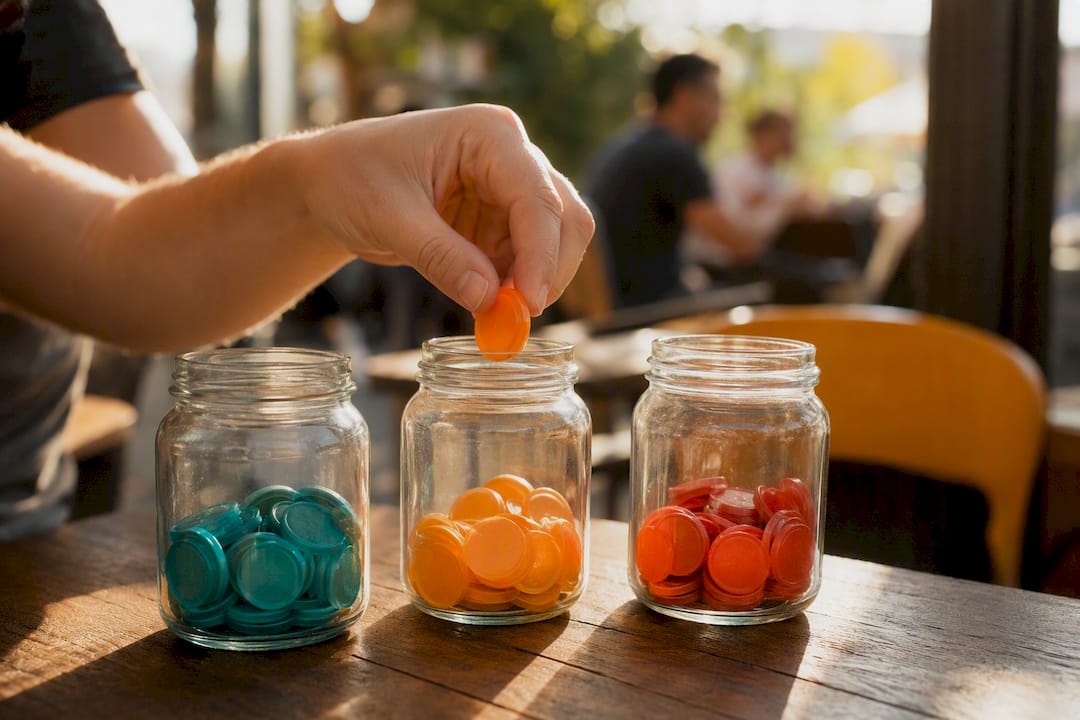
A prize is anything of value. Chance means the winner is picked randomly, not by skill. Consideration is the tricky one, because it doesn’t require cash. Some legal interpretations treat purchase requirements, and in narrower readings, even certain engagement demands, as a form of consideration. That’s the exact conflict Instagram giveaway rules exist to resolve.
The fix is an alternate method of entry (AMOE): a free way to enter that offers the same odds as any “easier” method, whether that’s liking a post or tagging a friend. Without a genuine AMOE, a purchase-linked or engagement-gated entry can tip a sweepstakes into lottery territory. Legal guidance on sweepstakes structure consistently recommends a mail-in or free online form as the safest AMOE format.
A conservative structure for most small businesses is either:
A sweepstakes with a genuine, equal-odds AMOE, or
A skill-based contest judged on defined criteria (caption quality, photo skill), which sidesteps the “chance” element entirely.
Some states require registration or bonding once total prize value crosses a set threshold. Legal advisories on state-level sweepstakes rules flag New York and Florida as states where high-value promotions can trigger these requirements, so talk to counsel before offering a prize worth several thousand dollars.
What Does Instagram’s Promotion Policy Actually Require?
Instagram’s own Promotion Guidelines sit on top of federal and state law, and they’re specific. Your post needs a complete release of Instagram and a clear statement that the promotion isn’t sponsored, endorsed, administered by, or associated with Instagram in any way.
Avoid these common mistakes:
Requiring users to tag themselves in a photo they aren’t actually in
Forcing entrants to share the post to their personal timeline as a mandatory entry step
Using engagement-bait language like “tag 10 friends” as the sole entry mechanic
None of these are just bad etiquette. Platform enforcement guidance notes that engagement-bait mechanics can trigger algorithmic demotion or a manual takedown, even when your legal paperwork is airtight.
Link the official rules in your bio, reference the link directly in your caption, or pin a comment with the URL. The goal is simple: a reader should be able to find and read the rules before they enter, not after.
How Do You Write an FTC-Compliant Disclosure?
Any material connection between your brand and a poster, whether that’s a free product, payment, or a discount code, requires disclosure under FTC rules. This applies whether you’re running the giveaway yourself or partnering with an influencer to host it.
Placement matters more than most marketers assume. FTC guidance is explicit that disclosures need to sit in the first visible lines of a caption, not hidden behind the “more” truncation. For Stories and Reels, superimpose the text directly on the image or video, and pair it with a spoken disclosure in video content.
A hashtag alone often isn’t enough. FTC’s plain-language guide for influencers recommends simple, unmistakable language like “#ad” combined with a short sentence such as “Thanks to [Brand] for the giveaway prize.” If you’re the sponsor working with an influencer, you’re still responsible for confirming the disclosure is actually there.
Pro Tip: Draft the exact disclosure sentence for your influencer partner in the contract, word for word. Don’t leave the phrasing to their judgment; a vague “check the fine print” instruction is how disclosures end up missing.
Which Entry Mechanics Are Safe for Your Goals?
Match your entry mechanic to your actual marketing goal, and always pair it with an AMOE.
Follower growth: “Follow us” as one entry option, paired with a free-entry AMOE like a website form.
User-generated content: Ask for a photo submission with clear language granting you permission to repost, plus a photo release clause in your rules.
Email capture: A sign-up form doubles as your AMOE and builds your list simultaneously.
Skip indiscriminate “tag 5 friends and share to your story” mandates. A caption that simply encourages organic sharing (“Know someone who’d love this? Send it their way”) gets similar reach without violating Instagram’s platform terms. To fight bot entries, screen for duplicate accounts and suspicious timestamps, and keep a written log of every entry for your records.
How Should You Choose and Notify a Winner?
Whether you’re running a random draw or a judged contest, document every step so the process holds up if anyone challenges it.
Random draw: Use a documented randomizer, screenshot the entry list and the result, and timestamp both.
Judged contest: Publish objective scoring criteria in advance, record each judge’s scores, and define a tie-breaker method before entries close.
Notification: Contact the winner through the method stated in your rules, and give them a firm claim deadline, typically 24 to 72 hours.
Unclaimed prizes: State your re-draw procedure in the rules so an unclaimed prize doesn’t leave the promotion in limbo.
Remind winners that a prize’s ARV may count as taxable income, and that they’re responsible for reporting it. That’s a conversation between the winner and a tax professional, not something your rules page needs to resolve.
Sample Official Rules Template You Can Adapt
Copy this structure, fill in the brackets, and you have a legally sound rules page in minutes:
Your caption checklist should include:
A one-line AMOE mention or link
A direct link (or bio reference) to the full official rules
The “not sponsored by Instagram” disclaimer, if not covered in the linked rules
Any required FTC disclosure, if the post involves an influencer or sponsor relationship
If you’re running multiple prize tiers, multiple winners, or an influencer-hosted promotion, add a clause covering each winner’s individual claim deadline separately.
How SOL Social Media Vets a Giveaway Before Launch
We run every client giveaway through a pre-launch review before the first post goes live: legal structure confirmed (sweepstakes vs. contest), AMOE tested end to end, rules URL live and linked, and captions checked against Instagram’s tagging and sharing restrictions. Influencer contracts, when involved, spell out disclosure wording in advance rather than leaving it to interpretation.
Every winner selection gets documented, screenshots, timestamps, and randomizer output included, so the record holds up if a client is ever asked to show their work.
Rules Alone Won’t Build the Following
The legal checklist matters, but it’s the smaller half of what makes a giveaway work. The compliance side is binary: you either included the AMOE and the platform release, or you didn’t. The half that separates a giveaway that builds real community from one that just rents attention for a week is what happens with the entrants after the prize ships.
Too many small businesses treat the giveaway as the campaign, when it should be the opening move. The entrants who didn’t win are still customers you can talk to, and the caption that got you those entries is the same skill that should be driving your everyday call-to-action copy. A giveaway with airtight Instagram giveaway rules but a forgettable brand voice will still underperform one that’s slightly less polished on paper but sounds like an actual person wrote it.
Our take: spend as much time on the follow-up content plan as you spend on the rules page. The legal work protects you. The relationship work is what turns a one-time entrant into a repeat customer.
Ready to Run a Giveaway That’s Legal and Effective?
Compliance protects your business, but a giveaway still needs a strategy behind it, one built around the right prize, the right timing, and follow-up content that keeps entrants engaged after the winner’s announced. SOL Social Media’s community involvement campaigns are built specifically for small businesses that want a giveaway handled end to end, from the rules page to the caption to the winner announcement.
If you’d rather keep your team focused on daily operations, our social media engagement services can manage the entire promotion calendar, giveaways included, so nothing slips through on a technicality. For brands considering an influencer-hosted structure, a platform like Influenna can help you find creators and manage the partnership terms that keep disclosures consistent across every post.
Sources
Keep Instagram’s Promotion Guidelines and the FTC’s Endorsement Guides open while you draft rules. For state-specific registration questions, review legal guidance on sweepstakes and contest requirements before finalizing any high-value prize.
FAQ
What Is the 5-3-1 Rule on Instagram?
The 5-3-1 rule is a content-mix guideline (five curated posts, three original posts, one promotional post per week) and isn’t a giveaway-specific legal requirement; it doesn’t override any of the entry, disclosure, or platform rules covered above.
How Do Instagram Giveaways Actually Work?
A brand posts entry instructions (like a comment or follow), collects entries during a defined period, then selects a winner through a random draw or judged criteria, provided the rules include a free AMOE and comply with Instagram’s Promotion Guidelines.
How Do Instagram Giveaways Choose Winners?
Winners are chosen either through a documented random draw (using a randomizer tool with saved timestamps) or through judged scoring against criteria published in the official rules before entries opened.
Does Your Instagram Need to Be Public to Win a Giveaway?
Instagram’s guidelines don’t require a public account to be eligible, but many brands verify winners through a direct message, so a private account that can’t be reached, or doesn’t respond within the claim deadline, may forfeit the prize under standard rules language.
Recommended
Comments