


Social Media Reporting: A Practical Florida Guide

Social media reporting is the structured, periodic process of compiling and analyzing social media performance data to transform raw metrics into strategic insights that guide decisions and demonstrate ROI. Unlike social media analytics, which runs continuously in the background, reporting is a deliberate snapshot: it explains the “so what” behind the numbers and communicates findings to stakeholders in a clear, narrative-driven format.
A solid report typically includes:
KPIs and key metrics aligned with specific business goals
Audience insights such as demographics and growth trends
Campaign results covering organic and paid performance
Recommendations for the next reporting period
For Florida businesses, one more layer matters. Under Florida Statute s. 501.1736, social media platforms must prohibit users under 14 from creating accounts and restrict certain features for users under 16. Marketers operating in Florida need to factor these compliance requirements into their reporting practices, particularly when campaigns target younger demographics.
What should your social media reports actually include?
Effective reporting starts with choosing metrics that connect to real business outcomes, not just numbers that look good on a slide.

Key social media metrics to track include reach, engagement rate, clicks, conversions, audience growth, and video views. Group them by objective: awareness metrics (reach, impressions) belong in one section; conversion metrics (click-through rate, sign-ups, purchases) in another. That structure makes it far easier to tell a coherent performance story.
A complete report follows a logical flow:
Executive summary: Two to three sentences on overall performance
Period-specific goals: What you set out to achieve
Metrics and KPIs: Data tied directly to those goals
Campaign insights: What worked, what did not, and why
Audience insights: Who engaged and how behavior shifted
Recommendations: Concrete next steps for the coming period
On cadence, monthly reports are the most common choice for tracking short-term progress and making real-time adjustments. Quarterly reports serve a different purpose: they reveal longer-term trends and work well for executive or board-level presentations. Your choice depends on how quickly your team needs to act on data.
Tailoring the report to its audience is just as important as the data itself. An executive wants a one-page ROI summary. A content manager needs granular post-level data. Build the same core report with different views for each reader.
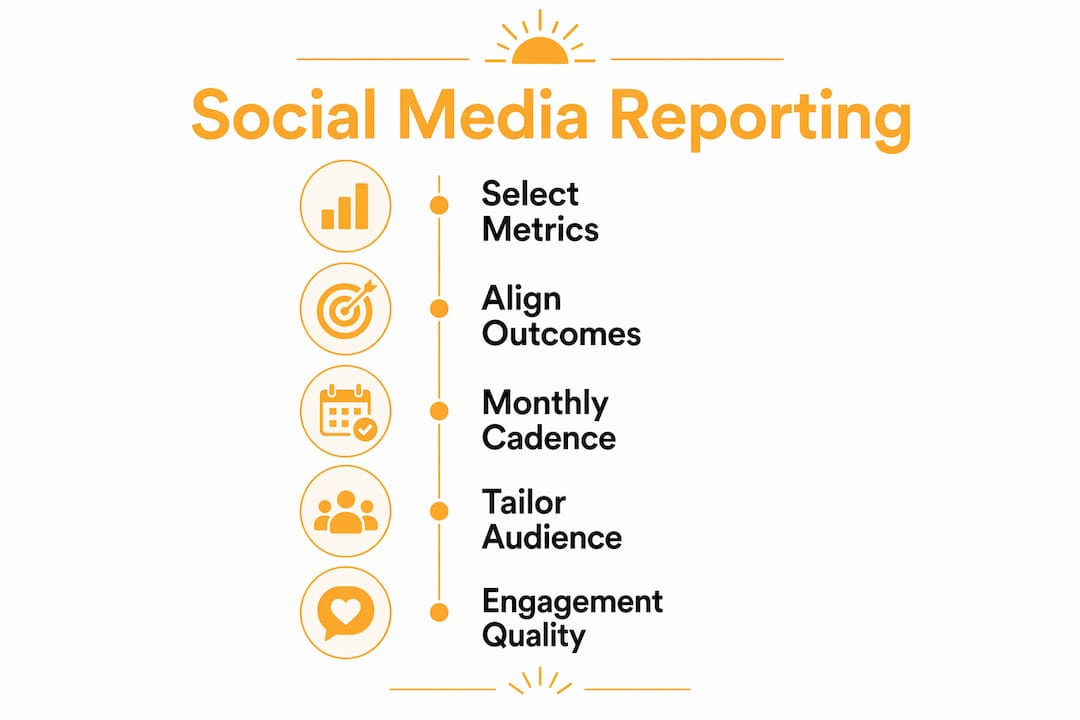
Pro Tip: Focus on engagement quality over vanity metrics. A saves-to-reach ratio often predicts long-term algorithmic success better than raw follower counts, making it a sharper signal for strategy adjustments.
Florida social media management providers worth knowing
Choosing a local provider means getting someone who understands both your market and Florida’s evolving legal environment. Here is how three Florida-based agencies compare.
Services offered | Specializations | Location | Certifications and awards | Customer rating |
Social media management, content strategy, paid social ads | Social-first strategy for established brands | South Tampa, FL | Business of the Year, South Tampa Chamber | Not publicly listed |
Social media marketing consulting, training, compliance coaching | Legal advertising ethics for law firms | Miami, FL | Not publicly listed | Not publicly listed |
Social media management, marketing services, reporting | Full-service social media marketing | Miami Beach, FL | Not publicly listed | Not publicly listed |
Brick Media is a South Tampa agency built around social-first strategy. They earned the Business of the Year Award from the South Tampa Chamber and focus on established brands that need content and paid social working together.
Social Media Law and Order takes a narrower lane: compliance-driven marketing for law firms. They offer training and consulting specifically around legal advertising ethics on social platforms, which matters in a state where bar rules and digital marketing intersect.
iScreamSocialMedia operates out of Miami Beach and covers the full range of social media marketing services, including management and performance reporting for brands across industries.
All three operate in a state where Florida’s minor-protection statutes directly affect how campaigns are structured and reported. Any provider you work with should be fluent in those requirements.
SOL Social Media brings reporting and strategy together for Florida businesses
Running a small business in Florida means your social media presence has to work harder than a generic post schedule. SOL Social Media offers full-service social media strategy built around your specific goals, including monthly content planning, social media audits, and performance reporting that connects metrics to real business outcomes.
Where most agencies hand you a dashboard and call it reporting, SOL Social Media delivers the narrative layer: what the numbers mean, what changed, and what to do next, aligning with insights from a social-first marketing agency. That applies whether you are a retail shop in Tampa or a healthcare practice in Orlando. The work is done for you, grounded in authentic human copywriting, and structured around your brand’s voice. Ready to see what your social media is actually doing? Get started with SOL Social Media and turn your data into a growth plan.
FAQ
What is social media reporting?
Social media reporting is the structured, periodic process of compiling and analyzing performance data from social media platforms to measure progress toward goals, demonstrate ROI, and guide future strategy.
What is the new social media law in Florida?
Florida Statute s. 501.1736 requires social media platforms to prohibit users under 14 from creating accounts and to verify the age of all new account holders, with specific restrictions for users under 16.
What happens if you report someone on social media?
The platform reviews the report and may issue a warning, limit the content’s reach, remove it entirely, or suspend the account. Response times vary and can take days to weeks, so following up with the platform’s moderation team is advisable.
What is the 5 5 5 rule for social media?
Definitions of this popular social media content rule vary across sources and no single canonical version exists. A common interpretation suggests balancing content across promotional, educational, and engagement-focused posts, but the exact breakdown differs by source.
Key Takeaways
Effective social media reporting connects metrics to business outcomes through structured, periodic analysis rather than raw data exports.
Point | Details |
Reporting vs. analytics | Analytics tracks data continuously; reporting is periodic and narrative-driven, explaining what the numbers mean. |
Core report components | Every report needs goals, KPIs, campaign insights, audience data, and clear recommendations. |
Reporting cadence | Monthly reports suit short-term adjustments; quarterly reports reveal trends for executive review. |
Florida compliance | Florida Statute s. 501.1736 requires age verification and account restrictions for minors, affecting campaign reporting. |
SOL Social Media | SOL Social Media provides full-service social media management and reporting for Florida small businesses, turning data into strategy. |
Recommended
Comments