


3 Essentials to Build a Social Media Crisis Plan for Small Teams

A social media crisis plan is a written, pre-approved playbook that tells your team exactly who acts, what they say, and how fast they move when a post, comment, or complaint threatens to spiral. The single most important move is building three things before you need them: a severity matrix that defines what counts as a crisis, a holding statement your legal team has already blessed, and a current contact list for everyone on the escalation chain.
TL;DR:
Building a severity matrix with measurable thresholds prevents false alarms and ensures timely activation of the crisis team.
A current contact list, clear escalation roles, and pre-approved responses enable rapid, authorized public replies within the critical first hour.
Monitoring should track volume spikes, sentiment shifts, and influencer amplification, with alert routing that minimizes false positives.
Regular tabletop simulations help identify gaps in response times, template effectiveness, and team preparedness, leading to continuous improvement.
The most effective crises are managed with fast, authentic responses that acknowledge the issue early and demonstrate action, restoring trust quickly.
What a Social Media Crisis Plan Covers (and Where It Ends)
A social media crisis plan governs public-facing activity on your brand’s channels: what gets posted, paused, or answered when something goes wrong in front of an audience. It is not the same as a full enterprise incident response plan, which covers data breaches, physical safety events, or regulatory filings. The two overlap constantly, but your social plan should stay focused on the conversation happening in comments, DMs, and shares.
Events that typically trigger this plan include:
A product failure or safety recall going viral before your company issues a formal statement
An employee or executive post that draws public backlash
Coordinated criticism from an influencer or activist group
A customer service complaint that gets amplified by high-follower accounts
Leaked internal communications or screenshots circulating publicly
Your social plan should name clear handoff points to legal (for anything with liability exposure), customer service (for individual complaints that need one-on-one resolution), and corporate communications (for anything requiring a press release or executive statement). Without those handoffs written down, your social team either freezes waiting for permission or improvises. Neither ends well.
Why Crisis Planning Can’t Wait for a Slow Quarter
Social media is now where most people first hear that a brand is in trouble, not the evening news or a press release. Sprout Social’s Q2 2026 Pulse Survey found that A majority of consumers expect a public response on social platforms specifically, rather than just a corporate press page.
The numbers that should worry your leadership team: 84% of consumers say response speed changes how they judge the severity of a crisis, and Many consumers say they’d consider buying from a brand again within months if the response was handled well, according to the same Sprout Social research.
That second figure matters more than most crisis guides admit. A crisis handled with speed and honesty can actually recover trust, sometimes faster than a slow news cycle would suggest. Forbes reporting on corporate crisis response makes the same point: controversies now unfold in real time on social platforms, and brands that treat speed, empathy, and authenticity as optional get punished for it.
The costs of skipping this work show up in predictable patterns:
Teams delay responding because no one has authority to approve a statement
The first public reply comes from an untrained employee improvising in the comments
Legal blocks a response for review with no pre-approved language ready to adapt
The brand response arrives after competitors, screenshots, and parody accounts have already framed the story
Research on 94 corporate crises found that intervening early, while a story is still spreading, meaningfully shortens how long it stays visible and damaging. Analysis of crisis response timing found that combining a quick informal reply with a more formal follow-up statement produced the best outcomes, better than either approach alone.
A One-Page Checklist to Audit Your Current Plan
If you already have something written down, use this list to find the gaps. If you’re starting from zero, build in this order.
Severity matrix with named triggers. Define three or four crisis tiers with specific numbers attached (mentions per hour, sentiment shift, influencer pickup), not vague language like “significant negative attention.”
Escalation matrix with named roles and backups. Every role needs a primary owner and a backup who can act quickly if the primary is unreachable.
Contact list refreshed quarterly. Phone numbers, not just email, for every person in the escalation chain.
Pre-approved holding statement. A single paragraph, legally reviewed, that can go out publicly within 15 minutes of a Tier 2 or higher event.
Response SLAs by severity tier. Written time windows for acknowledgment, detailed response, and internal team assembly.
Monitoring setup with defined keywords. Brand names, product names, executive names, and campaign hashtags, tracked continuously.
Account security protocol. Who can lock, pause, or hand over admin access to social accounts during an incident.
Sign-off authority documented. Name the person who can approve a public statement without waiting for a committee.
Quarterly simulation schedule. A calendar date, not an aspiration, for the next tabletop exercise.
A practical free crisis plan template lays out these same seven core sections with sample SLA windows you can adapt rather than build from scratch. Templates and sign-off authority should live in a shared drive every team lead can access without asking permission, not buried in one person’s inbox.
Building Your Severity Matrix and Trigger Thresholds
Most crisis plans fail not because nobody wrote one, but because the plan defines “crisis” too broadly. When everything counts as an emergency, teams burn out on false alarms and stop trusting the alerts. Shopify’s guidance on crisis planning makes this point directly: operationalize a severity matrix with measurable thresholds, or your team will drown in noise before a real crisis ever arrives.
A workable four-tier matrix looks like this:
Tier 1: Monitor. A single complaint or a handful of negative comments. Trigger: fewer than 20 mentions per hour, no sentiment shift, no outside pickup. Action: customer service handles it directly, no escalation needed.
Tier 2: Elevated Watch. A complaint starts gaining traction. Trigger: 20 to 75 mentions per hour, a noticeable negative sentiment shift (typically a 15 to 20 percent swing from baseline), or pickup by one mid-size account. Action: social manager notifies the crisis lead; holding statement drafted but not yet posted.
Tier 3: Active Crisis. The story is spreading fast. Trigger: over 75 mentions per hour, sustained negative sentiment, pickup by a verified influencer or local media outlet. Action: full crisis team activated, pre-approved statement goes live, legal and PR looped in immediately.
Tier 4: Severe Crisis. National media coverage, executive involvement required, potential legal or safety implications. Trigger: coverage by major outlets, coordinated hashtag campaigns, or direct threats to safety or legal standing. Action: executive team activated, formal press response coordinated with social messaging.
Mentions per hour relative to your account’s normal baseline, not an absolute number
Sentiment delta measured against your typical weekly average
Whether an account with meaningful reach (not just follower count, but engagement rate) has picked up the story
Whether the conversation has crossed from social into traditional media or a competitor’s channels
Thresholds are not permanent. Review them every quarter against your actual mention volume, because a brand with 500 weekly mentions and a brand with 50,000 need very different trigger numbers to avoid both alert fatigue and missed signals.
Pro Tip: Set your Tier 2 threshold slightly lower than feels comfortable for the first two months. It is far easier to downgrade an overcautious alert than to explain why a real crisis sat unnoticed for six hours because the bar was set too high.
Who Sits on the Crisis Team and When They Get the Call
A crisis plan without named people attached to it is a document, not a plan. Every role below needs a primary owner, a trained backup, and a phone number that actually gets answered.
Crisis lead. Owns the final call on tier escalation and statement approval. Usually the head of marketing or communications at a small organization.
Social media manager. Monitors channels, posts approved responses, and is often the first to spot a Tier 1 event before it becomes Tier 2.
Communications or PR lead. Drafts and refines public statements, coordinates with media if the story escalates beyond social.
Legal counsel. Reviews any statement touching liability, safety, or regulatory exposure before it goes public, ideally against pre-approved boilerplate rather than starting from scratch each time.
Customer service lead. Handles individual complaints and feeds patterns back to the crisis lead if isolated complaints start clustering.
IT or security contact. Locks down account access, checks for compromised logins, and manages platform-level reporting if the crisis involves a hack or impersonation.
HR representative. Gets looped in when the crisis involves employee conduct or internal culture issues that spilled into public view.
Escalation timing should scale directly with the severity tier. A Tier 1 event needs no formal notification beyond a note in a shared channel. A Tier 2 event should trigger a prompt message to the crisis lead upon detection. A Tier 3 or 4 event needs the full team assembled, by phone or video, within 30 to 60 minutes of confirmation.
Three practices separate plans that work under pressure from ones that fall apart:
Maintain two contacts per role, because the person on vacation is always the person you need most.
Refresh the contact list every quarter, not annually. Phone numbers change more often than most teams assume.
Write down who has final sign-off authority in writing, so nobody wastes 20 minutes during a Tier 3 event trying to figure out if the marketing director or the CEO gets the last word.
Setting Up Monitoring That Catches Problems Early
You cannot respond to a crisis you do not see coming. Social listening tools should track more than your brand name. Build query lists around your brand name, product names, executive names, campaign hashtags, and common misspellings people use when they’re angry and typing fast.
The signals worth watching fall into four categories:
Volume spikes relative to your account’s normal baseline, tracked hourly rather than daily
Sentiment shifts, especially sudden negative swings rather than gradual drift
Influencer or media amplification, meaning accounts with real engagement picking up the story, not just follower count
Cross-channel pickup, where a complaint on one platform starts appearing on others within a short window
Guidance on managing project-related backlash recommends treating early identification of emerging issues as its own discipline, separate from routine social listening, because the signals that predict a real crisis often look different from everyday customer complaints.
Alert routing matters as much as detection. A monitoring tool that pings the entire team for every mention creates the same fatigue problem as an overly broad severity matrix. Route Tier 1 signals to a single person for daily review. Route anything crossing your Tier 2 threshold to the crisis lead directly, with a defined validation step before anyone escalates further: is this a real pattern, or one angry customer with a large following?
Pro Tip: Build a shared document that logs every alert your team investigates, even the false positives. After three months, you’ll have real data on where your thresholds are miscalibrated instead of guessing.
Preparing Templates and Playbooks Before You Need Them
Writing a response from scratch during an actual crisis costs you the 15 minutes you don’t have. The templates below should exist in a shared, easily accessible document, reviewed by legal in advance, and structured so a non-writer on your team can adapt them fast.
Templates to prepare in advance:
Holding statement. A short, general acknowledgment that you’re aware of the situation and looking into it. This buys time without committing to specifics you might have to retract.
Acknowledgment reply. A public comment response for individual complaints that are visible but not yet at crisis scale.
Escalation reply. A more detailed public statement for Tier 2 and Tier 3 events, with placeholders for specific facts once verified.
Direct message template. For moving a public complaint into a private channel where customer service can resolve it one-on-one.
Internal alert message. A short script the social manager uses to notify the crisis lead, including what tier triggered it and why.
Governance is where most templates fail in practice. Guidance on crisis plan templates recommends building modular boilerplate that legal pre-approves in chunks, rather than a single rigid statement, so your team can assemble an accurate response fast without waiting for a fresh legal sign-off every time.
Follow this sequence when adapting a template in real time:
Verify the facts before posting anything beyond a generic holding statement. A fast but wrong response damages trust more than a slightly slower accurate one.
Match the tone to the tier. A Tier 1 complaint gets warmth and a quick fix. A Tier 3 event gets measured, careful language that avoids admitting liability before legal has weighed in.
Escalate for formal review the moment a response touches safety, legal exposure, or executive conduct, even if the holding statement has already gone out.
Post the adapted template, not the raw boilerplate. Readers notice canned language, and a response that feels copy-pasted undermines the authenticity your audience is watching for.
Log the final version used, so your post-crisis review has an accurate record of what actually went public and when.
Research on crisis response behavior backs the pacing built into that sequence: reacting instantly without verifying key facts often produces worse outcomes than a response that takes a few extra minutes to confirm accuracy. Speed matters, but studies on reactive versus responsive crisis behavior suggest the fastest response is not always the safest one. Balancing those two pressures, urgency against accuracy, is the actual skill a crisis plan is designed to protect.
Response Timing: What Happens in the First 24 Hours
Speed expectations differ by severity tier, but every plan needs concrete time windows attached to each phase of response, not aspirational language like “as soon as possible.”
0 to 15 minutes: Confirm the signal is real, not a false positive. Pause any scheduled promotional posts across all channels immediately, regardless of tier, since a cheerful scheduled post next to a public complaint reads as tone-deaf.
15 to 60 minutes: Assemble the relevant portion of the crisis team based on severity tier. For Tier 2 and above, post the pre-approved holding statement publicly within this window.
60 to 360 minutes: Develop and issue a more detailed response once facts are verified. This is where the escalation reply template gets adapted with specifics.
24 to 72 hours: Monitor sentiment recovery, respond to follow-up questions, and prepare a fuller statement if the situation requires ongoing public updates.
Account security belongs in this same window. Confirm no login credentials have been compromised, especially if the crisis involves impersonation or a hacked account, and designate who has authority to temporarily restrict posting access if needed. A free crisis plan template with sample SLA windows is a useful starting benchmark, but adjust the exact minute counts to match your team’s realistic response capacity rather than copying numbers designed for a company with a 24-hour communications desk.
Keeping the Team Sharp With Regular Simulations
A plan that only exists on paper fails the first time real pressure hits. Tabletop simulations expose the gaps: the backup contact whose number is outdated, the template that doesn’t actually fit the scenario, the sign-off process that takes twice as long as anyone expected.
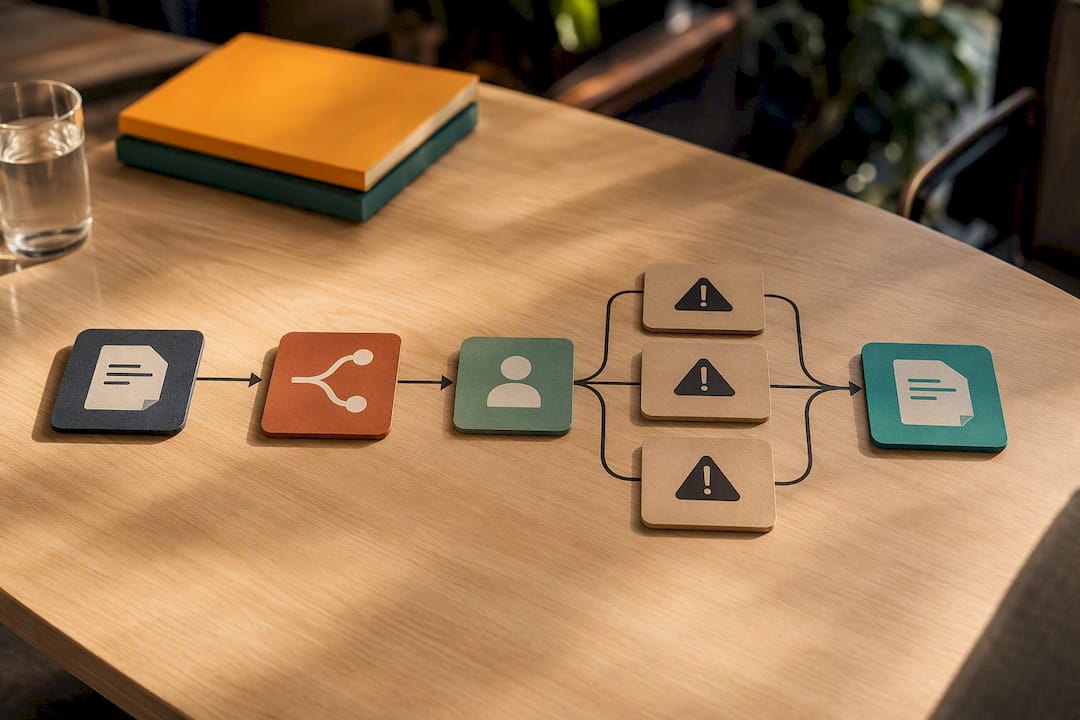
Structure each simulation around a SMART goal, something specific and measurable like “reduce time to first public acknowledgment from 40 minutes to under 20.” Guidance on running crisis simulations recommends building realistic scenarios with a surprise element, a detail the team didn’t know was coming, since real crises never unfold exactly as planned.
Practical exercise design should include:
A realistic scenario drawn from your actual industry (a product complaint, a leaked internal message, an executive controversy)
Timed checkpoints that mirror your real SLAs, forcing the team to hit the same 15 and 60 minute windows they’d face live
At least one role-played stakeholder, a reporter, an angry customer, or an executive demanding updates
A structured debrief immediately after, while details are fresh
Run these quarterly at minimum, more often for teams handling higher-risk industries like healthcare or finance. Measure two things after each simulation: how long each phase actually took against your written SLAs, and where the team hesitated or improvised because the plan didn’t cover the scenario. Feed both findings directly back into the plan document. A simulation that doesn’t change anything in writing afterward was just a meeting.
Reviewing What Happened and Updating the Plan
Every crisis, handled well or badly, is a data point your plan should absorb. Build a standard post-mortem checklist and run it within a week while memories are still accurate.
Evidence to gather immediately:
A timeline of events from first detection to resolution, with exact timestamps
Screenshots of the original triggering content and your team’s responses
Analytics on mention volume, sentiment shift, and reach at each phase
Internal notes on where the team hesitated or deviated from the written plan
KPIs worth tracking after every incident:
Time to first acknowledgment, measured against your written SLA
Sentiment recovery time, how long until mentions returned to baseline
Share of voice during the crisis window, whether your brand’s messaging outpaced critical commentary
Customer recovery indicators, repeat engagement or purchase activity in the following weeks
Version every update to the plan document with a date and the name of who approved the change. A crisis plan that changes without a record of why becomes impossible to audit six months later when someone asks why a threshold moved. Assign one person, usually the crisis lead, as the final approver for plan changes, so updates don’t drift without oversight. Building recovery tracking into your broader online reputation management work keeps these KPIs connected to your everyday brand health metrics, not siloed as a crisis-only exercise.
What Real Crises Teach Small Teams About Speed and Tone
The pattern separating a recovered brand from a damaged one usually comes down to three factors: how fast the first response went out, whether it sounded human, and whether the follow-up matched what was promised.
Fast, empathetic response: Brands that acknowledge a problem publicly within the first hour, even without every fact confirmed, tend to see faster sentiment recovery than brands that stay silent while gathering facts.
Delayed or mishandled response: Waiting for a perfect, fully-vetted statement while public anger builds almost always costs more trust than a slightly imperfect but timely acknowledgment would have.
Successful recovery: Cases where the brand followed its holding statement with concrete action, not just words, and communicated that action publicly, tend to see the strongest rebound in customer sentiment.
The lesson scales down to small teams without a dedicated PR department: you don’t need a communications office to move fast. You need a pre-written holding statement, one person with authority to approve it, and the discipline to post it within the first hour rather than waiting for a committee that doesn’t exist yet.
How a social media agency puts this plan into practice
Building a crisis plan from a blank page is where most small teams stall. SOL Social Media approaches this the same way we approach event social media planning: start with fillable templates rather than theory, then adapt them to the client’s actual risk profile and staffing reality.
For clients, that means:
Mapping a severity matrix to the client’s real mention volume, not a generic industry benchmark
Building SLA windows that match the size of the actual team answering messages, whether that’s one person or five
Drafting holding statements and DM templates in the brand’s authentic voice, not generic corporate language
Running lightweight tabletop simulations scaled to a small business calendar, not a Fortune 500 exercise schedule
Integrating crisis monitoring into the customer service workflows the team already uses daily
The goal is the same for a five-person retail team as it is for a national brand: a plan that exists on paper before it’s needed, not one improvised in the comments section at 2 a.m.
The Conventional Wisdom on Crisis Plans Gets the Priority Backwards
Most crisis planning advice leads with response templates, as if the words you say are the hard part. They aren’t. The hard part is the boring infrastructure underneath: a severity matrix with real numbers, a contact list that’s actually current, and a person with named authority to hit publish without a committee meeting first.
Teams that skip straight to writing a holding statement usually discover, mid-crisis, that nobody agrees on what counts as a Tier 2 event or who’s allowed to approve the response. The research on crisis response timing backs this up indirectly: the brands that intervened earliest weren’t necessarily the ones with the best copywriters. They were the ones with a structure fast enough to catch the problem while it was still small.
If you’re building your first plan, resist the urge to start with messaging. Start with the severity matrix and the escalation chain. Get those two things solid, tested through at least one tabletop run, before you spend another hour perfecting a holding statement’s tone. A well-written statement with no one authorized to send it is worthless. A rough statement sent fast by someone with clear authority beats it every time.
— SOL Social Media
Getting Hands-On Help Building Your Plan
If you’ve read this far and realized your organization has no severity matrix, no named crisis lead, and no holding statement sitting ready to go, you’re not alone, and you don’t have to build it solo. SOL Social Media works with small businesses to turn this playbook into an actual working document: a severity matrix calibrated to your real mention volume, an escalation chain with your team’s names attached, and templates written in your brand’s voice instead of generic corporate language.
Our social media engagement services include ongoing monitoring setup, so alerts reach the right person instead of flooding an inbox nobody checks. For organizations rebuilding trust after a rough incident, our community involvement programs help translate a crisis response into genuine, visible follow-through with the audience that watched it unfold. If you want a second set of eyes on what you already have, or a plan built from scratch, reach out through Solsocialmedia to schedule a consultation and find out which engagement model fits your team’s size and risk level.
Sources
FAQ
What is the 5-3-1 rule for social media?
The 5-3-1 rule is a content posting guideline, unrelated to crisis planning: post 5 curated pieces, 3 original pieces, and 1 promotional piece per week to keep a feed balanced.
What are the key components of a crisis management strategy?
A solid strategy centers on preparation, monitoring, and a clear command structure: a severity matrix, a named escalation chain, pre-approved messaging, defined response SLAs, and a post-crisis review process.
What are the 5 steps of a social media plan?
For crisis readiness specifically, the five practical steps are building a severity matrix, assembling a crisis team with escalation paths, setting up monitoring and alerts, preparing response templates, and running regular simulations with post-mortem reviews.
Can you give an example of a social media crisis?
A product safety complaint that gets amplified by an influencer before the company issues an official statement is a common example, especially when the brand’s first public reply arrives hours after screenshots have already spread.
How fast should a brand respond to a social media crisis?
Aim to post a pre-approved holding statement within 15 to 60 minutes of confirming a Tier 2 event or higher, since 84% of consumers say response speed shapes how they judge the severity of the situation.
Recommended
Comments